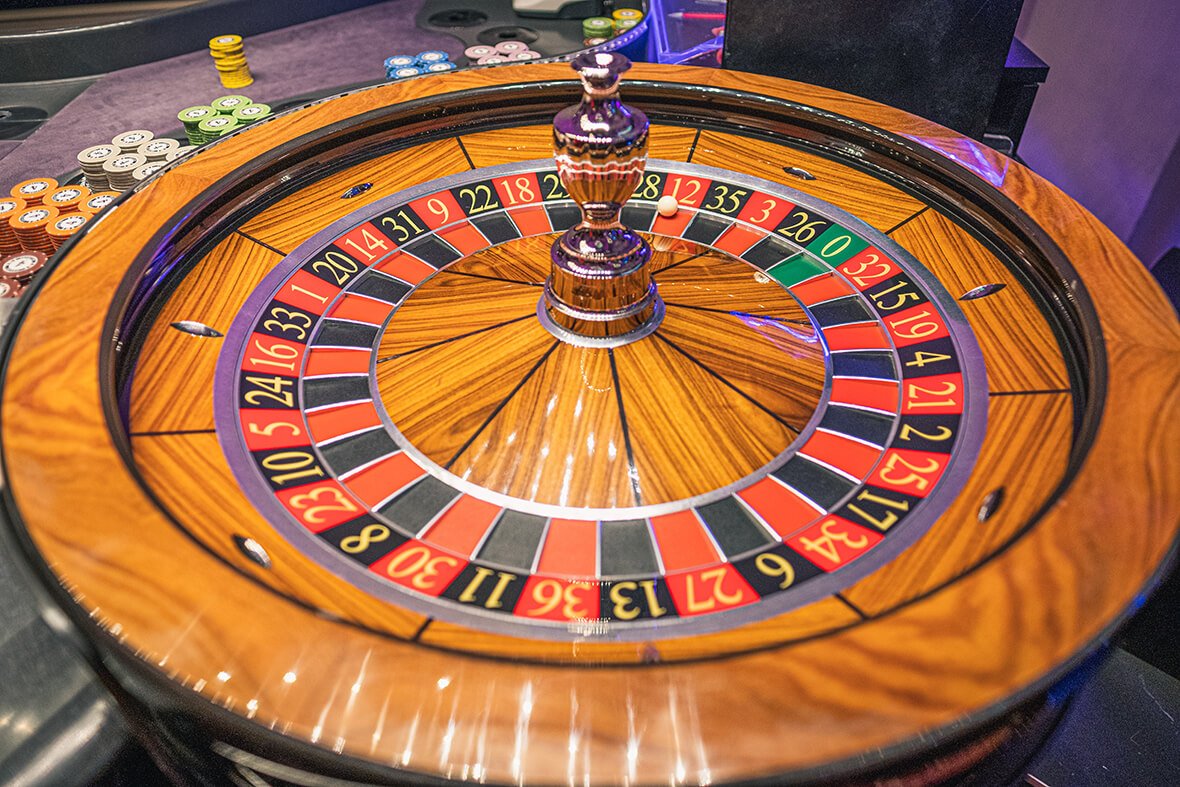
Roulette is one of the simplest casino games to learn and one of the most mathematically transparent. A ball spins around a wheel, lands in a numbered pocket, and every bet on the table either wins or loses based on that single number. No decisions after the bet is placed, no complex rules, no hidden mechanics.
That simplicity is roulette’s greatest strength — and its strategic limitation. Unlike blackjack or poker, there are no skill-based decisions that change the expected outcome. Roulette strategy is entirely about game selection, bet structuring, and bankroll management.
The Basic Rules
A roulette wheel contains numbered pockets: 1-36 (alternating red and black) plus one or more green zero pockets. Before the dealer spins the ball, players place bets on where they think it will land. Once the ball settles, all bets are resolved instantly based on the outcome.
The number of zero pockets defines the game variant and its house edge:
| Variant | Pockets | Zeros | House Edge | RTP |
|---|---|---|---|---|
| European | 37 | 1 (green 0) | 2.70% | 97.30% |
| French (la partage) | 37 | 1 (green 0) | 1.35%* | 98.65%* |
| American | 38 | 2 (0 and 00) | 5.26% | 94.74% |
*French roulette’s 1.35% house edge applies to even-money bets only when the la partage rule is in effect. Other bet types carry the standard 2.70% edge.
Bet Types and Payouts
Roulette bets are divided into two categories: inside bets (placed on specific numbers or small groups of numbers) and outside bets (placed on larger groupings like colours or odd/even).
Inside Bets
| Bet Type | What It Covers | Payout | Win Probability (European) |
|---|---|---|---|
| Straight Up | Single number | 35:1 | 2.70% |
| Split | Two adjacent numbers | 17:1 | 5.41% |
| Street | Row of three numbers | 11:1 | 8.11% |
| Corner | Four numbers in a square | 8:1 | 10.81% |
| Line | Two rows (six numbers) | 5:1 | 16.22% |
Outside Bets
| Bet Type | What It Covers | Payout | Win Probability (European) |
|---|---|---|---|
| Red/Black | Colour of winning number | 1:1 | 48.65% |
| Odd/Even | Odd or even number | 1:1 | 48.65% |
| High/Low | 1-18 or 19-36 | 1:1 | 48.65% |
| Dozen | 1-12, 13-24, or 25-36 | 2:1 | 32.43% |
| Column | 12 numbers in a column | 2:1 | 32.43% |
On European roulette, every bet type carries the same 2.70% house edge. The payout structure is designed so that no bet is mathematically superior to any other. The only exception is French roulette with la partage, where even-money bets have a reduced 1.35% edge.
Strategy: What You Can and Can’t Control
Because roulette outcomes are random, the only strategic decisions happen before you place your bet:
Choose the right variant. This is the single most impactful decision. Playing European instead of American roulette reduces the house edge by nearly half. Playing French roulette with la partage cuts it further. This choice alone has more impact on your expected return than any betting system ever devised.
Structure your bets for your goals. Outside bets create longer, steadier sessions with small swings. Inside bets create shorter, more volatile sessions with the potential for larger single-spin payouts. Neither approach changes the house edge, but they create different session profiles — similar to how volatility works in slots.
Manage your bankroll. Set a loss limit and a win target before you start. Size your bets to give yourself at least 30-50 rounds of play. Stop when you hit either boundary. The discipline to stop — especially when ahead — is the closest thing to an “edge” a roulette player can have.
Ignore betting systems. Martingale, Fibonacci, and other progressive staking plans cannot overcome the house edge. They restructure when you win and lose, but they don’t change the total expected loss over a given number of spins. Over a long enough timeline, the house edge prevails regardless of staking methodology.
Roulette vs Slots: A Comparison for Online Players
If you play both roulette and slots online, it’s worth understanding how the two compare mathematically:
| Factor | European Roulette | Play’n GO Slots (Max RTP) |
|---|---|---|
| House Edge | 2.70% | 3.80% (at 96.2% RTP) |
| RTP Transparency | Fixed by game rules | Variable by casino configuration |
| Max Single Win | 35x stake | 5,000x – 50,000x stake |
| Session Volatility | Low-Medium | Medium-Very High |
| Speed | 30-60 sec/round (live) | 3-5 sec/spin |
Roulette offers better baseline odds and complete transparency. Slots offer higher win potential and more diverse gameplay. Many players use roulette for steady, lower-risk sessions and switch to Play’n GO slots when they want high-volatility, feature-driven gaming — always at casinos running the maximum 96.2% RTP.
Frequently Asked Questions
What is the best roulette strategy?
The most effective roulette “strategy” is game selection: choose European or French roulette over American. Beyond that, set firm bankroll limits and bet sizes that allow 30+ rounds of play. No betting pattern can overcome the house edge, but disciplined bankroll management ensures you play longer and maximise entertainment value.
What are the odds of winning in roulette?
On European roulette, even-money bets (red/black, odd/even, high/low) win 48.65% of the time. A straight-up bet on a single number wins 2.70% of the time (once in roughly 37 spins on average). The house edge of 2.70% means the casino retains £2.70 of every £100 wagered over time.
Is online roulette fair?
Licensed online roulette games are audited by independent testing labs to verify their RNG produces fair, random results. Live dealer roulette adds an extra layer of transparency since you can watch the physical wheel spin in real time. For maximum confidence, play live dealer European or French roulette at a licensed casino.